Mamaj's Aviation Blog Travel News, Events, Trends, Jobs, Gossip and Inspiration

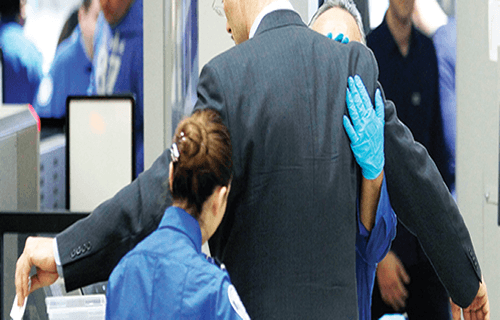 Aviation makes up a substantial part of the transportation industry. Its size, impact, integration and use by countries all over the world make it vulnerable to attacks. Over the years, we have witnessed persistent threats to the industry and recognise that they will continue as long as there are people who want to cause harm to others.
Realities
While understanding that the threat is very real, it is also critical to recognise that there is no such thing as absolute, fool proof security. This applies to groundbased facilities as well as aircraft. If security procedures and checks have not been able to keep contraband out of high-security prisons, it is unreasonable to expect them to keep unauthorised items off aircraft, where (thankfully) security checks of crew and passengers are far less invasive than they are for prisoners.
As long as people, luggage and cargo are allowed aboard aircraft, and as long as people on the ground crew and the flight crew have access to aircraft, aircraft will remain vulnerable to a number of internal and external threats. The people organising and carrying out criminal activities are rapidly becoming more sophisticated.
That is why it has become urgent for all to be aware of emergtween secure and insecure areas to smuggle drugs and weapons. A contract worker with airside access places explosives on an airplane. A former worker provides detailed intelligence to a terrorist organisation about the innerworkings of a major airport.
The thought of an insider threat brings considerable concern to organisations operating in the aviation industry. It is not a new concept, but it is receiving rising attention today because of recent security breaches. Will airports around the world adopt full employee screening as a countermeasure?
Threats to aviation
Improvised Explosive Device (IEDs) has long existed and today, it still remains a major threat to aviation and security. IEDs are made out of common household products and range from simple to elaborate. They are easy to mold and can fit anywhere, which make them even more dangerous when concealed well.
From the underwear bomber of 2009 to the cargo plane bomb plots of 2010, there are now concerns of more creative concealment techniques using a new generation of improvised explosive devices and components that will be more difficult to detect. This includes thermite-based incendiary devices, which the U.S. Transportation Security Administration (TSA) acknowledges is a serious threat that burns violently and at a high temperature.
Cyber attack
With society’s increasing reliability on technology, cyber securiing threats to aviation security. The insider threat is generally a former employee, current employee, contracted worker, or partner who misuses access to the organisation’s information or network systems.
They pose immense risk to aviation security and are very unpredictable. Insider threats include sabotage, theft, espionage, fraud, exploitation and tampering of items. In the case of Nigerian airports, however, the chances of success or failure to launch a successful strike in the air are greatly predetermined by what takes place on land.
Airport security, to a great extent, forms the greatest hurdle for a successful terrorist attack and thus remains the best and often times last option for a terrorist attack to be easily identified and thwarted. Security experts say Aviation Security (AVSEC) should deemphasise physical security to intelligence gathering and use of technology.
They noted that the security protocols implemented at any airport are far beyond those things seen with the eyes or hear. A lot evolve from a well-articulated and approved national security programme, which is a resultant document based on a painstakingly documented security risk assessment and safety management system.”
A security expert told New Telegraph that if a tout could infiltrate sensitive and restricted areas of the airport without being thwarted, a terrorist can, in most likelihood, do the same. An insider’s cruel act is therefore more challenging to detect and thwart. An airport employee goes be bety must be of high priority.
Cyber threats to computer systems on the ground and at the airport can cause flight delays, loss of power, system failures, and a breakdown in communication between networks. Attacks to aircrafts in the sky can mean disruptions to navigations systems, losing on-board aircraft control and no communication with the ground. Cyber attacks are inexpensive to carry out, but are able to cause a broad range of disruptions.
Six layers of defence
The CEO of Centurion and Safety Consult, Group Captain John Ojikutu (rtd) said that there would always be threat to civil aviation from terrorist organisations because civil aviation (airport and airline in particular) has always been in progression of their targets.
Therefore, states and operators have obligation and responsibility to perform preventive measures to safeguard civil aviation against any act of unlawful interference. These preventive measures, he said, are generally in six layers of defence. These include intelligence: this is information gathering from state security agency about persons or citizens who are threat to the nation (on-fly-list) and those who could be risk to civil aviation (on watch list) sent to the concerned authorities for the sharing among relevant civil aviation operators.
The second is passenger prescreening where from the pool of booked passengers the airline profiles passengers to determine those who could pose risks to flights and list them as selectees. Such passengers would need additional screening above the baseline adopted for regular passengers at the check-point screening.
The third is airport access control security perimeter fence, where passengers are identified and segregated from staff and unauthorised persons are prevented from entering the airport security controlled areas. The fourth layer is checkpoint screening for passenger carry-on bags and staff screening, while the fifth is checked-in baggage, cargo, mail and catering screening.
The sixth layer deals with on- board security. “How effective these preventive measures will be, especially now that we are in the midst of terrorists threat depends on state security sgency assessment of threat and the regular reviewing of the security programmes of airlines and other operators at the airports.
“This review is carried out by the Nigerian Civil Aviation Authority (NCAA) with target to see how these operators meet the challenge of prevailing threats,” said Ojikutu. “We all know that we are in the middle of threats daily from the terrorists and that our security forces have sometimes been infiltrated by element of these terrorist group, but we still allow persons in uniform to have access to the airports and their weapons are not sufficiently identified,” he added.
Risk assessment
The CEO of Scope Centre, an aviation security outfit, Mr. Adebayo Babatunde, recently said that the most critical element of security management system was the comprehensive risk assessment of the airport. “It is clear to say that five to six years ago one would not be talking about security of our airports and because of the scattered location of our airports, the security threat levels are high; the same with the security profiles of each airport, which is different from one another.
So we cannot assume that the security prepared for Lagos airport will be suitable for the airport located in Maiduguri. “Through the comprehensive risk assessment you will be able to determine the potential security threat. The gaps that are necessary and the solutions you need, to close those gaps in terms of technology and access control,” Babatunde said.
Conclusion
Staying ahead of the latest threats will be of critical importance in the aviation industry. This means proactively finding vulnerabilities within your own systems and processes and ensuring they are strengthened. This also means training employees to recognise dangerous items on the job and unusual behaviour among passengers and other workers. Keep employees informed about the latest emerging threats and create a network for information sharing.
Source:newtelegraph