Mamaj's Aviation Blog Travel News, Events, Trends, Jobs, Gossip and Inspiration

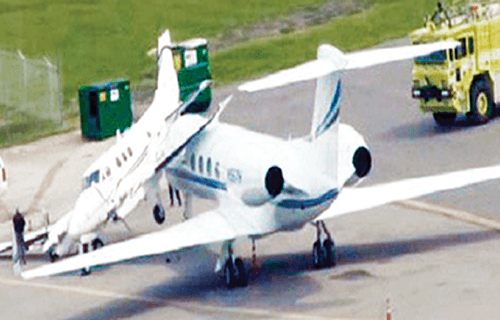 With every tragic high profile crash, the general public’s feeling about airline safety takes a punch, WOLE SHADARE writes
While aviation has been getting safer of late, runway incursions by aircraft or vehicles remain a weak spot. After all, during each flight, the passengers literally put their lives in the hands of complete strangers.
More often, inattention and confusion are to blame. Pilots can lose their way in the maze of taxiways or in a moment of neglect to hear a controller’s instructions. Radio communications can get mixed up. Airport signs identifying runways and taxiways can be confusing. Vehicle drivers get lost.
Anxiety
While this is equally true for other forms of transport, they, however, do not meet the same kind of anxiety and even fear. What will really put the fear of flying into the hearts of passengers is when they personally experience an incident on the runway. Safety first is at the core of flight crew and air traffic control alike, still runway incidents and accidents keep occurring. Another fact is that the amount of global flight movements is increasing at a rapid pace.
Growth without appropriate actions will eventually mean the acceptable level of safety can no longer be reached. This can seriously harm the future of aviation. This then poses the question of whether the number of runway safety related accidents will ever drop. Runway Incursion is the unauthorised presence of an aircraft, vehicle, person, animal or object on a runway or associated runway strip that constitute a hazard to aircraft landing, take off or taxiing within the movement area of an aerodrome.
While runway safety incidents and accidents do not have the high casualty rate and profile they are still at the top of the list of all reports on aviation safety. According to the International Civil Aviation Organisation (ICAO) Safety Report 2014, 62 per cent of all accidents were runway related.
Causes
In terms of who caused an incursion -pilots, controllers, or pedestrians or vehicles on the runway- airline and air taxi pilots appear to be doing the best job of improving safety. In 2010, 57 per cent of incursions were attributed to “pilot deviations,” compared to 33 per cent for operational incidents (controller errors) and 10 per cent for vehicle drivers or pedestrians. By the end of 2014, pilot deviations had linearly decreased to 39 per cent while operational incidents linearly increased to 48 per cent; vehicle and pedestrian incidents remained relatively constant.
Ground hazards
Though most passengers may not be aware of the hazards on the ground, such near misses are not isolated. Since 2008, there have been about three incidents a day in which a plane or a vehicle gets on an active runway by mistake, an average of 1,000 a year.
That number has been steady over the last four years while the total number of flights has declined. In a small number of these cases, a catastrophic collision is narrowly avoided – sometimes only through sheer luck. The issue has festered even as regulators and the airline industry have made significant gains in reducing other major aviation hazards, especially those in flight. Advances in navigation technology in recent decades, for instance, have sharply reduced midair collisions and crashes into mountains and other obstacles, two of the most common causes of accidents.
NAMA’s rescue
But a similar urgency to address runway safety has lagged, safety experts said. Worried by the incessant cases of runway incursions and excursions, the Nigeria Airspace Management Agency (NAMA), last week, at Runway Safety Workshop held in Lagos, said runway safety remains the most critical aspect of air safety, not only because the most critical phases of flight operations occur within the runway strip, but because of the multiplicity of sensitive activities that take place within the airside.
These activities, according to the Managing Director of NAMA, Ibrahim Abdulsalam, include takeoff and landing of aircraft, surface movement of aircraft, movement of operational vehicles, security personnel, Jet A1 vehicles, construction vehicles, airfield lighting maintenance personnel, navigational aids maintenance personnel, aerodrome rescue and fire fighting vehcles, ATC vehicles on runway inspection, wildlife, vegetation and bird control, search and rescue vehicles, as well as various other stakeholders operating therein.
Abdulsalam noted that the Abuja Declaration that emanated from the resolutions of the Ministerial Conference of African Ministers of Transportation held from July 16-20, 2012 recommended the implementation of appropriate measures to reduce the rate of fatal accidents within the African continent by not less than 50 per cent in order to bring it down to the global rate.
Accident rate/fewer flights
The above decision, he reiterated, was necessitated by the fact that while the African continent accounts for the least volume of flight and passenger movement as compared to other continents of the world, Africa nevertheless accounts for the highest rate of fatal aircraft accidents globally.
In addition, NAMA disclosed plans to install surface movement radar systems at Lagos and Abuja for the effective surveillance and control of aircraft, vehicle and personnel on ground at these airports. This system would ensure that aircraft and vehicles operating within the airside are equipped with transponders for effective detection by Radar or ADS-B systems.
Acquisition of safety tools
In addition, NAMA’s plans to install surface movement radar systems will ensure that aircraft and vehicles operating within the airside are equipped with transponders for effective detection by Radar or ADS-B systems.
Airports provide solutions
Only in the last year have some of the airports installed new ground radars that provide air-traffic controllers a better view of the runways, and a handful of airports are now testing a new system of warning lights on runways. The Federal Aviation Administration (FAA) said the number of runway incidents that it classified as most severe – in which a collision is narrowly avoided – had dropped in the last decade.
The American highest aviation regulatory body stated that in 2000, there were 67 serious incidents with only half involving a commercial aircraft, compared with just 12 in 2014.
Conclusion
The downward trend for airline and air taxi pilot faults is contrary to that of the overall piloting community, which is seeing an increase in errors, largely attributable to general aviation pilots in light aircraft.
Source:newtelegraph